November 2026 Lake Matters

Wow. What a beautiful week we have been having. Get outside this weekend and enjoy the weather – because it looks like winter is arriving in a hurry next week! In this month’s e-news, we have updates for you about our CLWA programs this past month, lake friendly tips for this time of year, updates on statewide efforts to limit PFAS environmental impacts, and more. We are still finalizing our harmful algae bloom (HAB) numbers from the season and hope to have final numbers to share next month.

In this issue:

  • NYS DEC “Water Connects Us All” Poster Contest (Grades 6-8)
  • Aquatic Native Plants – Not Just “Lake Weeds”
  • Support CLWA: Donate to our Annual Appeal
  • Oak Wilt Presentation
  • CLWA Education Program Updates
  • Lake Friendly Living Tips
  • Pre-order your 2027 CLWA Calendar Today!
  • PFAS News – Keeping PFAS out of our Environment

Click here for the full e-news report.

Click here to sign up for CLWA’s e-newsletters and to stay current on Canandaigua Lake and its watershed.

Posted in News

Water Quality Update for Friday, October 2, 2026

The Lake This Week

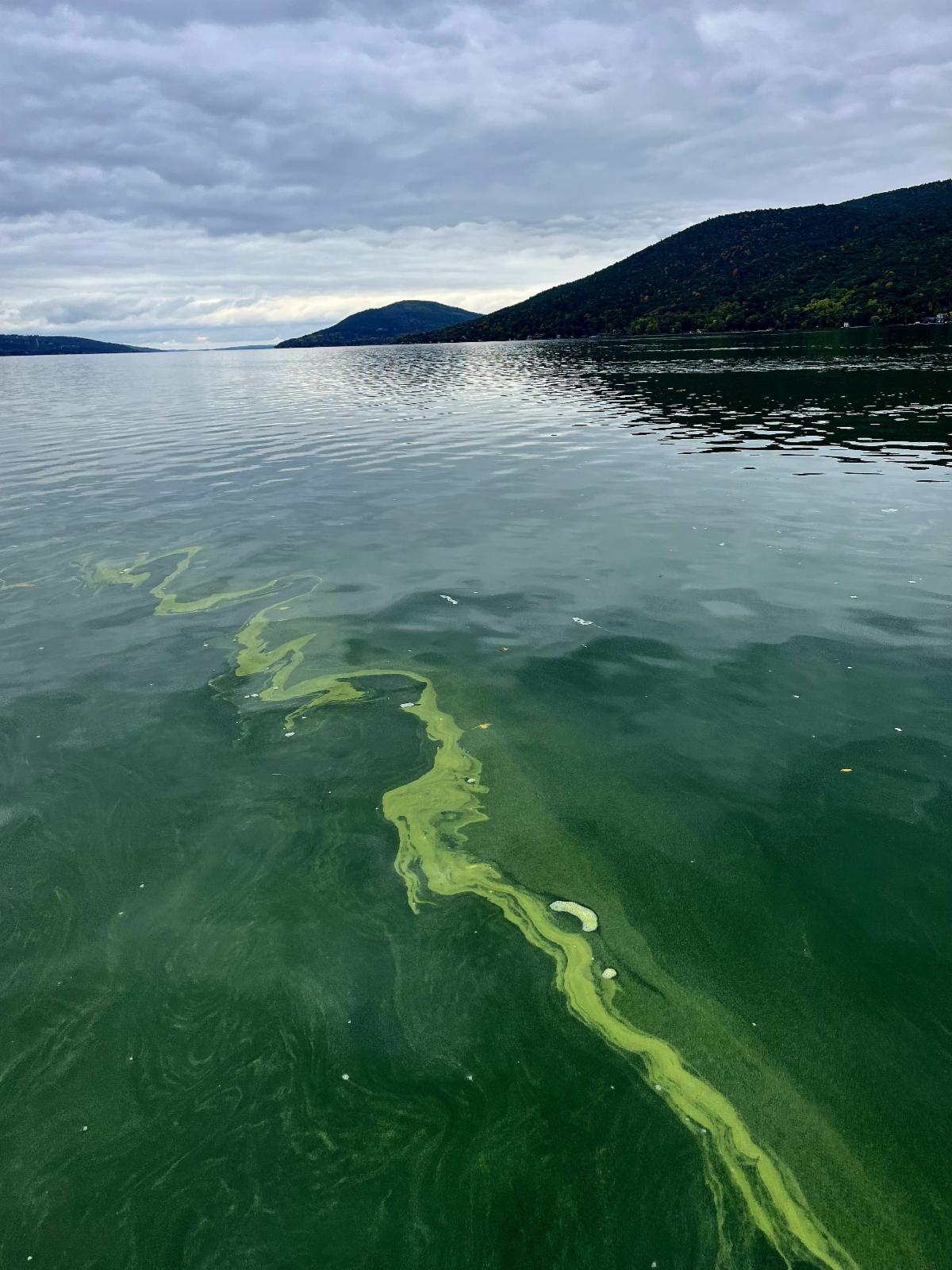
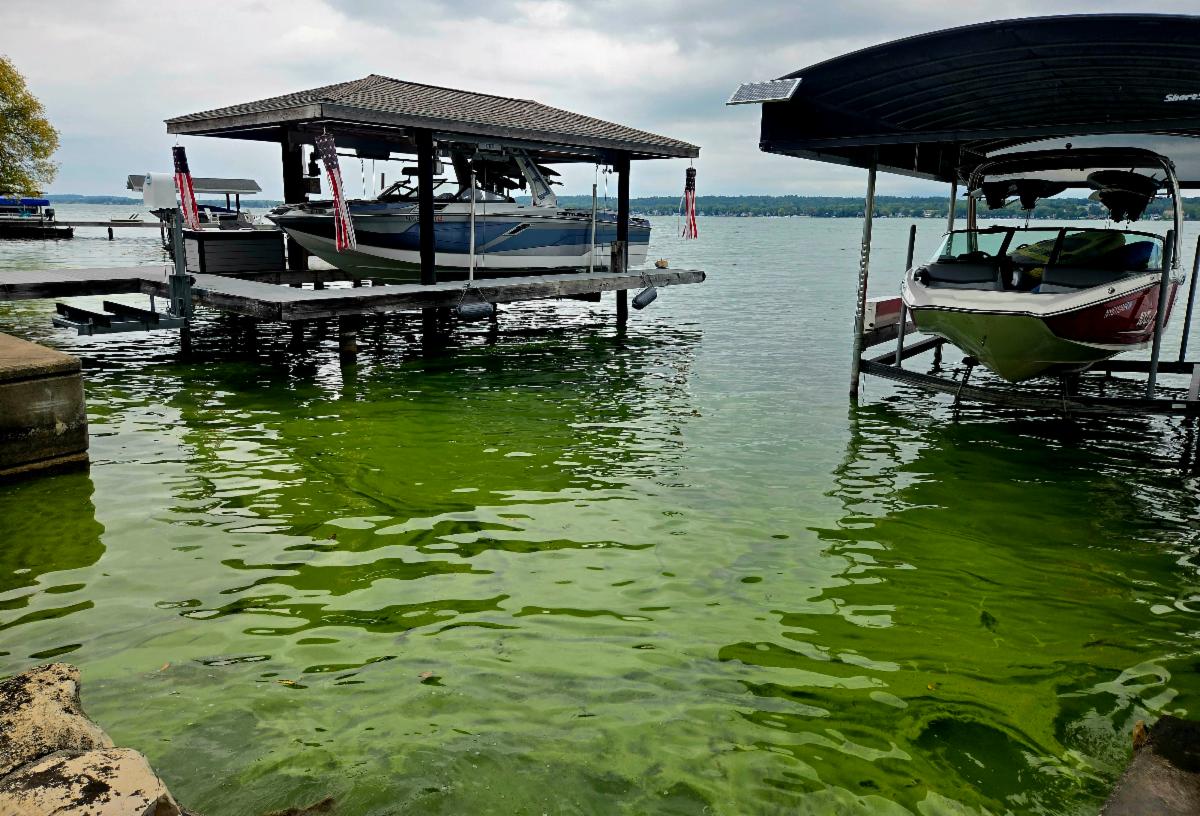
Average water clarity is about the same as last week while average surface water temp continues to get cooler – both about as expected for this time of year. Lake level is down ever so slightly this week compared to last. Despite cool temps and cloudy skies at the beginning of the week, we had 14 harmful algae bloom reports come in this week. With some sunshine back in the forecast we should have some beautiful fall weather coming up.

This is our last weekly water quality report of the season. We hope you’ve found these updates helpful and that they’ve kept you connected to what’s happening on Canandaigua Lake. Thank you for following along and for being part of the community that cares for and protects our lake.

As we wrap up weekly reporting, we’ll return to our monthly e-news updates -continuing to be a Voice for the Lake by sharing science-based information, updates, and ways you can help support a healthy Canandaigua Lake.

Click here for the week’s full report.

Click here to sign up for weekly water quality update emails and to stay current on Canandaigua Lake and its watershed.

Posted in News, Water Quality Updates

Water Quality Update for Friday, September 26, 2026

The Lake This Week

Average water clarity is up and average surface water temp is down this week – both as expected for this time of year. Lake level is down ever so slightly this week compared to last. We had five harmful algae bloom reports come in this week but they were all very low levels of algae – and so are still considered ‘suspicious’ and haven’t all been confirmed yet has blooms. Tuesday was the first day of Fall – and while there might be some nice boating weather left – its definitely pretty chilly for a swim – with water temperature back down to where it was earlier this season in mid-June.

Click here for the week’s full report.

Click here to get weekly water quality update emails and to stay current on Canandaigua Lake and its watershed.

Posted in News, Water Quality Updates

Oak Wilt in the Watershed and the Importance of Oaks – by Sonya Carnevale, CLWA Outreach Committee Member


This past summer, oak wilt appeared on our property for the first time. Oak wilt is a serious fungal disease which most likely originated in Central or South America. The first case in NY was discovered in 2008 but through the efforts of the NY DEC, infections have thankfully remained isolated.

Oak trees are enormously important. Apart from their economic value, they play a critical role in our ecosystems. In fact, the oak is considered a keystone species. In a roman arch, the keystone is the wedge-shaped stone at the top which locks all the other stones into place. If you remove the keystone, the arch will tumble. Similarly, because oaks are at the base of the food chain, without oaks, the food web could be in danger.

We have about 16 native species of oaks in NY, divided into two categories: red oaks (including red, scarlet, pin, and black) and white (including white, burr, chestnut and swamp). Combined, they host about 385 species of insects. Their acorns are an important source of food, not just for squirrels, but for numerous small mammals, bears, and birds including jays and turkeys. Even wood ducks and mallards depend on acorns during the winter! Besides being a food source, oaks are important for shelter, breeding, and have massive root systems which hold onto soil and filter water. In addition, due to their size, mature oaks sequester more carbon than many other trees.

The lifespan of an oak in the state of NY, is 100-400 years, depending upon the species. And with each year, they have more cracks and crevices, offering habitat. Therefore, the longer an oak lives and the larger it grows, the more life it supports, the more carbon it sequesters, and the more water it filters.

Unfortunately, oaks, like many other species, are facing multiple threats. We have an overabundance of deer, who eat the saplings. We mitigate fires, so that within forests, shade loving trees have the advantage. Invasive plants are also crowding out oak saplings. Longer droughts due to climate change cause stress. Remember spongy moth caterpillars? They stressed our local oaks through defoliation for a couple of summers in a row and they’ll eventually be back. As if that isn’t enough, we now have oak wilt.

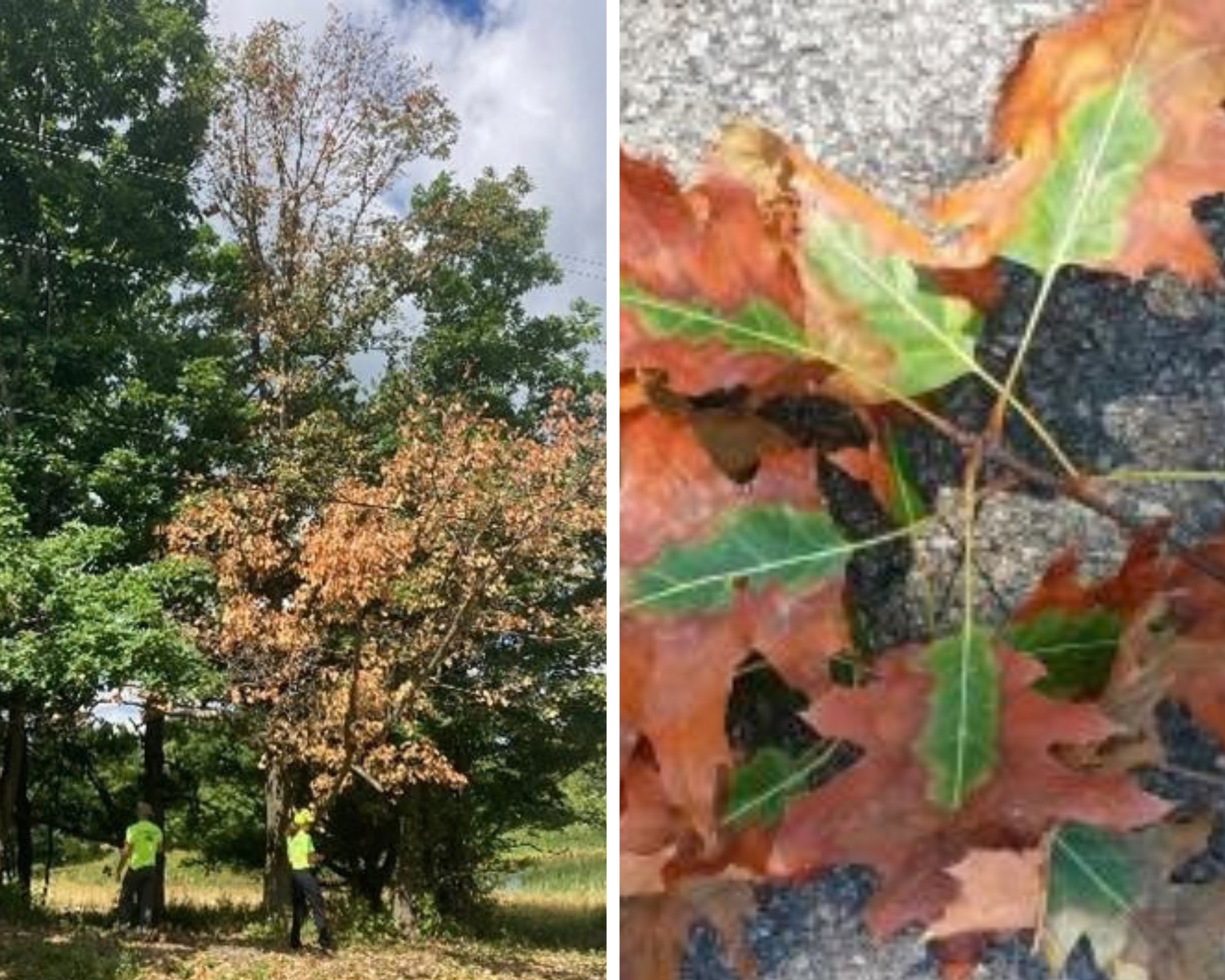
Oak wilt is a disease caused by a fungus called Bretziella fagacearum that cuts off the flow of water and nutrients from the roots to the crown of the tree causing the leaves to wilt, hence the name, eventually killing the tree. Red oaks are more susceptible and may die within a few weeks. White oaks typically last longer, a few branches dying at a time; sometimes they manage to survive. The fungus spreads in a few different ways:

  1. Native beetles. The fungus forms spore mats under red oak bark the spring after the tree has died. Nitidulidae, sap feeding beetles, and Scolytinae, bark feeding beetles both inadvertently pick up fungus spores while crawling around. When an oak branch is pruned or broken, it leaves a beetle-attracting wound thereby transmitting the disease to an otherwise healthy tree.
  2. Tree roots and inosculation. Neighboring oaks of the same group (red vs white) graft their roots together enabling the sharing of water and nutrients which is particularly helpful for weaker trees. However, this unfortunately also permits the fungus to spread underground from oak to oak.
  3. People. Pruning oaks during the growing season of NY (March – September/October) creates an open wound that attracts the insects. Moving infected firewood can transport both the fungus, and the beetles that spread it.

When the fungus infects a red oak, the symptoms are dramatic, as was the case on our property. In mid-July, our previously healthy black oak suddenly lost a massive number of leaves. Looking up into the tree, we saw the dying canopy. The leaves on the ground consisted of both dead leaves and leaves that were still partially green, but turning brown on an outer edge moving toward the central vein. My husband and I were immediately concerned and turned to the NY DEC website, where a list of symptoms confirmed our fears. I reached out to the DEC with pictures of the tree, the canopy, the trunk, a close-up of a leaf, and the number of leaves on the ground. They responded quickly and sent a couple of knowledgeable employees out for an inspection and samples. Within a couple of weeks, we had our answer. It was oak wilt, and the tree needed to be destroyed.

Once diagnosed, the DEC came back to assess how best to handle the situation. They scouted for any other trees in the red oak group within a 50-foot radius. Luckily for us, only one other small red oak was within that boundary. Then, they came back, cut down and chipped the two trees leaving only small fragments which cannot retain enough moisture for the fungus to survive. The stumps were also treated with an herbicide to kill the root systems. Happily, they were able to leave a white oak sapling growing nearby because the root systems of the two oak groups will not graft together.

Importantly, there was no cost to us for the consultation, diagnosis, cutting, or chipping of the tree.

The best way forward is to remain very vigilant. While the NY DEC does its part by conducting aerial surveys during the growing season, establishing quarantine areas that prohibit moving potentially diseased oak wood, and managing infected trees that they find, they can use our help.

  1. Go to https://dec.ny.gov/nature/forests-trees/forest-health/oak-wilt and learn the symptoms of infected trees.
  2. Help scout and report anything suspicious that you see.
  3. From March – October, don’t prune oak trees unless you must, apply a water-based spray paint or wound dressing to any wounds or pruning cuts, or consider hiring a tree professional.
  4. Follow NYS firewood regulations and rules within quarantine districts.
  5. Don’t be afraid to plant oak trees outside of a 150-foot boundary of any infected sites. Nature moves forward by natural selection of the healthiest specimens which cannot happen without enough oaks. We need more oaks adapting to oak wilt and other stressors, not less.
  6. Spread your new knowledge! I find that many people have never heard of oak wilt before.

If you would like to learn more about the amazing amount of life that oaks support, their importance in our ecosystems, and how to help them, click this link to watch the recorded public video by Douglas Tallamy, a renowned entomologist.

Why We Need Oaks and How to Save Them by Douglas Tallamy

References

New York State Department of Environmental Conservation. (2026, February 15). Oak wilt. https://dec.ny.gov/nature/forests-trees/forest-health/oak-wilt

Ducks Unlimited. (2020). Understanding waterfowl: Acorns and aquatic invertebrates. Ducks Unlimited Conservation. ducks.org

Tallamy, D. (2026, January 16). Why we need oaks, and how to save them [Video]. YouTube. https://www.youtube.com/watch?v=3ftjhtltV10


Photos by DEC

Posted in Lake Friendly Living, News

Water Quality Update for Friday, September 18th, 2026

The Lake This Week

Average water clarity and lake surface temperature are about the same this week as last – with a slight decrease in temps and lake level as expected this time of year. However our number of reported harmful algae blooms was the highest this week to date for this season – with 24 reports coming in from trained CLWA volunteer monitors. We also recevied numerous phone calls at our office and emails to our HABs@canandaigualakeassoc.org email address.

Click here for the week’s full report.

Click here to get weekly water quality update emails and to stay current on Canandaigua Lake and its watershed

Posted in News, Water Quality Updates

Summer Newsletter

CLWA’s Summer Newsletter is hot off the press.
Posted in News

Water Quality Update for Friday, September 11th, 2026

The Lake This Week – September 11th

The cooler nights at the beginning of the week were making it start to feel like Fall! While Labor Day on Sept 7 might have marked the unofficial end of summer for many – we hopefully will still have some summer weather to enjoy – at least until the Fall Equinox on Sept 22. Surface temperature and water clarity averages as well as lake level are all very similiar to last week – with slight declines all around. 9 harmful algae bloom reports came in this week, all in the beginning of the week on Sept 7 and 8, and they were all small, localized reports with light algae.

Click here for the week’s full report.

Click here to get weekly water quality update emails and to stay current on Canandaigua Lake and its watershed.

Posted in News, Water Quality Updates

Water Quality Update for Friday, September 4, 2026

The Lake This Week – September 4, 2026

This week we had quite the weather with rain on multiple days and a big lightning storm Wednesday night. Luckily Canandaigua faired better than other areas in our region – which had 5 confirmed tornados. Water clarity and surface temperature averages are about the same as last week – but lake level has increased a bit with all the rain. After the rain on Wednesday – hot, calm weather conditions in the afternoon brought numerous reports of harmful algae blooms around the lake.

Click here for the week’s full report.

Click here to get weekly water quality update emails and to stay current on Canandaigua Lake and its watershed.

Posted in News, Water Quality Updates

Water Quality Update for Friday, August 28, 2026

The Lake This Week

This week seems to have flown by quickly and relatively quietly. Cooler temps at the beginning of the week definitely brought down our surface water temperature – the average is down almost 3 degrees. Water clarity increased slightly and the lake level decreased slightly. We only had one harmful algae bloom reported this week.

How is 2026 comparing to 2025 so far? Average surface temps are just about the same right now as they were last year. Water clarity (measured by secchi disk depth) has seemed a bit better actually – and is overall very similar except for the difference at the beginning of the season.

Lake level is slightly lower than last week. Currently both outlet gates are closed and the feeder canal gate is open at the required minimum – 0.25 ft open. There are a few different places you can find the lake level online. NOAA is one. Lake Levels online also has nice charts – where you can easily see the whole year and compare to the last few years.

Click here for the week’s full report.

Click here to get weekly water quality update emails and to stay current on Canandaigua Lake and its watershed.

Posted in News, Water Quality Updates

Water Quality Update for Friday, August 21, 2026

The Lake This Week

Average lake surface temp, water clarity and lake level are all about the same this week as last. We have 5 harmful algae bloom (HAB) reports in this week’s dashboard – but they are all from last weekend on Saturday and Sunday. We have had no new bloom reports during the week. We had some rain overnight on Monday and then again a bit on Wednesday, with temperatures cooling off and the high only 72 degrees F on Thursday. Today and tomorrow have warmed back up and are looking like great days to be out enjoying the lake. Sunday will depend on if the forecasted afternoon thunderstorms show up or not.

**Update – before we managed to hit send – we got word that Onanda Park’s beach had to close today due to a HAB. The water is looking better already – but per DOH protocol they must wait 24 hours once it looks clear for DOH to collect a sample to be tested. Unfortunately, due to the timing – this means the beach will be closed all weekend. **

Click here for the week’s full report.

Click here to get weekly water quality update emails and to stay current on Canandaigua Lake and its watershed.


Posted in News, Water Quality Updates