
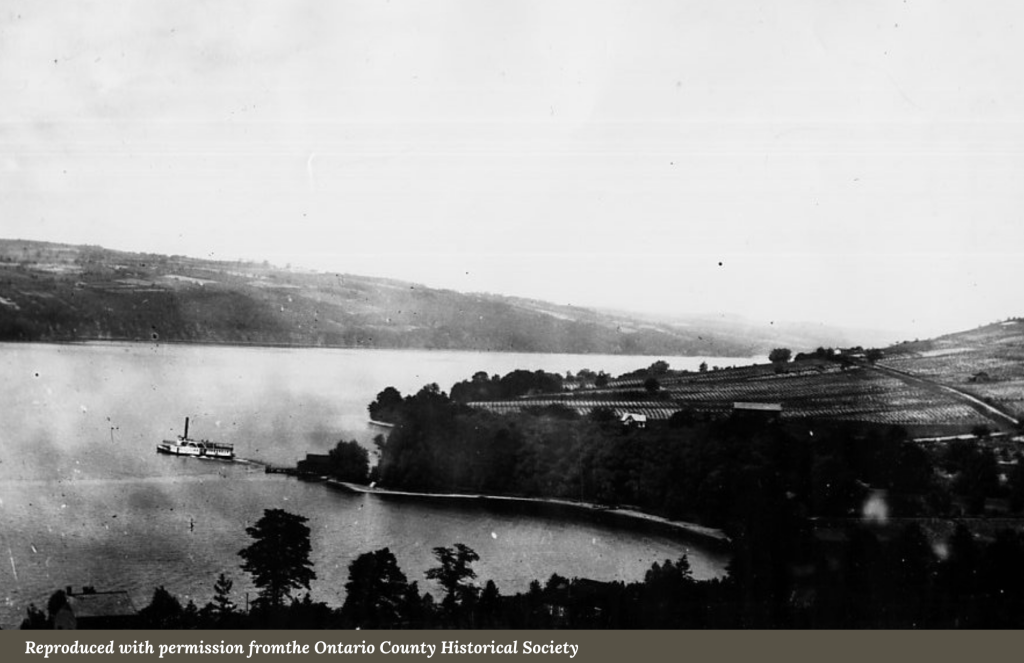

History of the Onnalinda
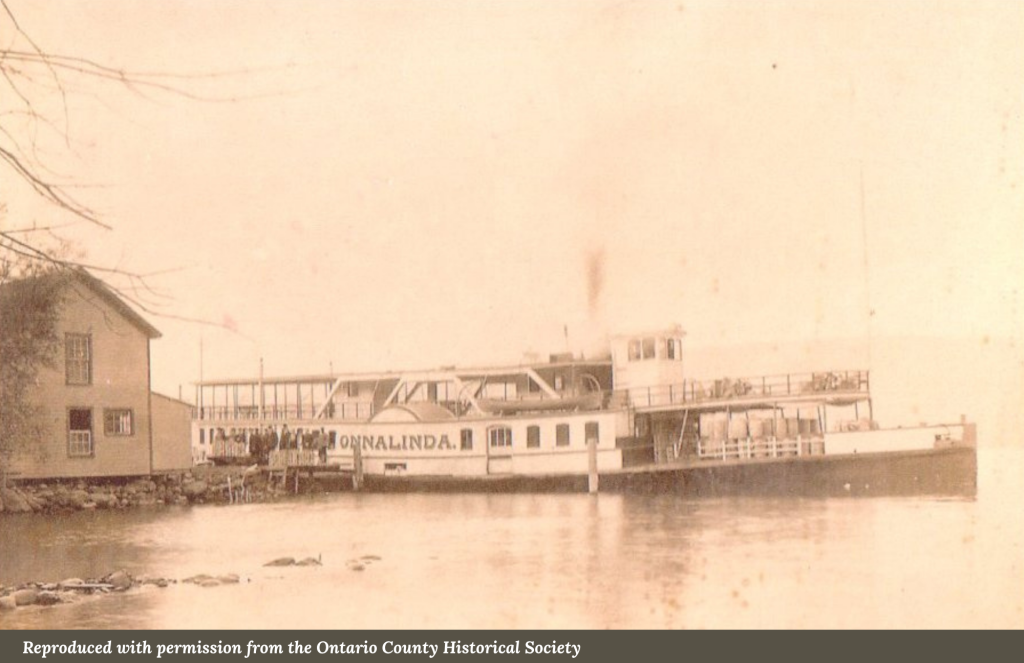
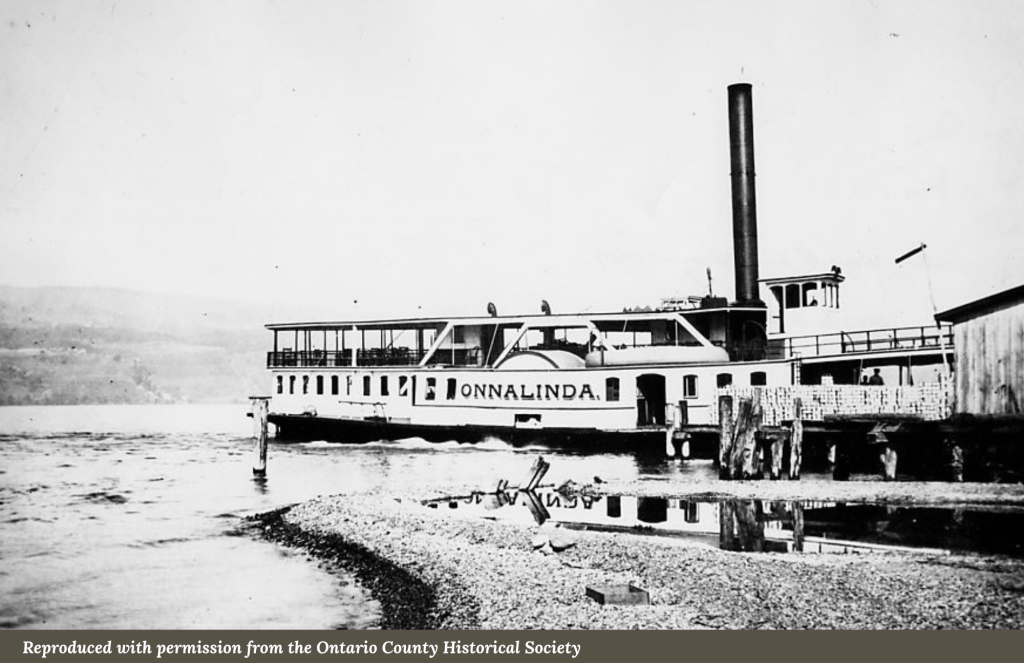
Known as the “Queen of Canandaigua Lake’s Steamboat Era,” the Onnalinda was the largest steamer on the lake, carrying up to 600 passengers, with another 400 aboard a boat in tow during busy summer Sundays. Launched on May 18, 1888, it was built by Alonzo W. Springstead for the Canandaigua Lake Transportation Company. Measuring 142 feet long, the steamer was powered by a 40-pound boiler, operated by a five-person crew, and even featured a snack bar. After 25 years of service, the Onnalinda was dismantled and sunk off the Canandaigua Yacht Club in 1913.
Things to also include:
- Map of two sites
- 3D Modeling
- Made possible by RACF (logo)

About the Steamship Era
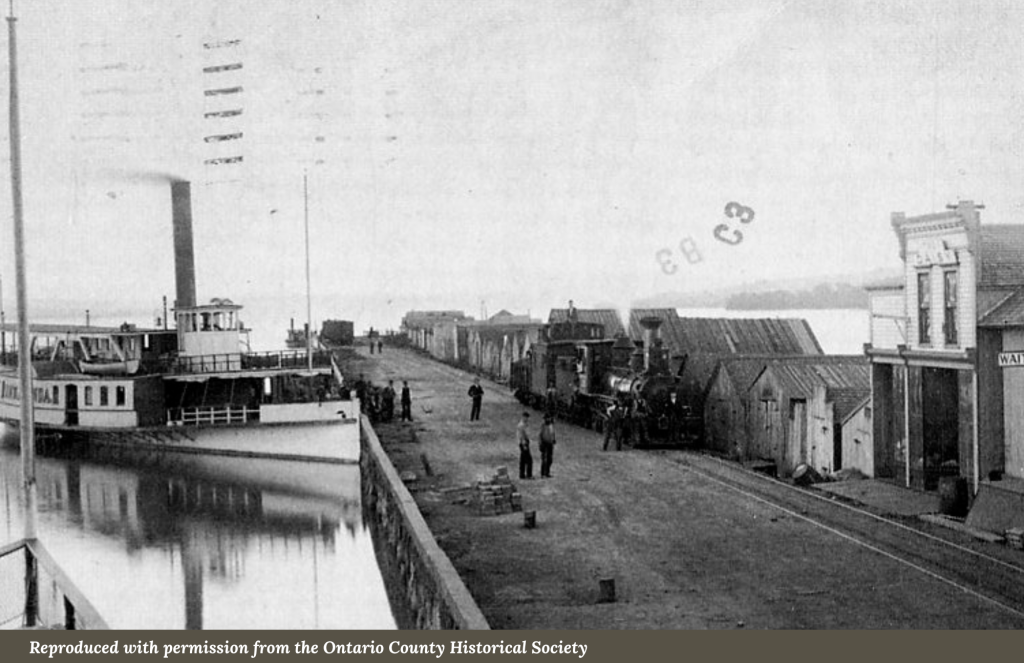
From the mid-1800s through the early 1900s, steamboats were the lifeblood of Canandaigua Lake, serving as the primary link between lakeside communities before modern roads and automobiles. They transported passengers, farm products, lumber, and manufactured goods, supporting both local commerce and the region’s growing tourism industry. Hotels, resorts, cottages, and public landings around the lake depended on regular steamboat service, making travel on the water an essential part of everyday life.
As demand increased, larger piers and more sophisticated vessels transformed transportation on the lake. In 1880, the Canandaigua Lake Steam Navigation Company was formed to establish regular steamboat service, ushering in the lake’s golden age of steam travel. During this period, renowned shipbuilder Alonzo W. Springstead constructed many of the lake’s most iconic steamers, including the Onnalinda, Ogarita, Genundewah, Oriana, and Onanda. These elegant vessels became symbols of progress and prosperity, carrying thousands of passengers each season.
Although the arrival of railroads and, later, automobiles gradually ended the steamboat era, its legacy remains an important chapter in the history of Canandaigua Lake. The steamboats not only connected communities and fueled economic growth but also helped shape the recreational and cultural identity of the Finger Lakes, leaving a lasting impression that continues to be celebrated today.
The Beginning of the Underwater Preserve Exploration:
The CLWA is excited to promote our local underwater history. In early 2021, Canandaigua Lake enthusiast and CLWA volunteer Scott Hill came to the press with a fascinating discovery – the shipwreck site of the Seneca Chief on Canandaigua Lake. More information can be found in this article.
In the fall of 2021, CLWA began working with Scott Hill to explore the concept of establishing an “Underwater Preserve” of shipwreck sites on Canandaigua Lake – starting with one of the easiest sites to navigate to – the Onnalinda site, which resides in approximately 5 feet of water in the northeast section of the lake. The site is to be marked with a buoy and kayakers, paddleboarders, and snorkelers are encouraged to interact with the wreck.
There is a wealth of information available on the history of the Onnalinda, including great pictures when it was in service on the lake, and on the historical and cultural significance of Canandaigua Lake’s steamboat and navigation era. (Also, In partnership with Pictometry, a 3D model of the Onnalinda shipwreck has been rendered.)
Images of Onnalinda Shipwreck
Underwater photos provided by Scott Hill
How to Safely Enjoy the Wreck
Video of Underwater Preserve
3D Model of the Onnalinda provided by:
Dana Carris
M.S. Maritime Archaeology and Conservation
Texas A&M University
3436 photos taken with timelapse photo mode, Go-Pro Hero 10, rendered in Agisoft Metashape
“The shipwreck was modeled in June 19, 2024. I would like to thank Scott Hill and the Canandaigua Lake Association for providing the opportunity to record this unique site. The sidewheel steamer had a length of 142 ft and beam of 40 ft. A large portion of the lower hull remains intact. Significant remains include frames (floors and portions of futtocks), heavy stringers, exterior hull planking, and iron pipes and fittings. A large concentration of bricks, possibly ballast, were observed near amidships.” – Dana Carris