
Soak up the Rain
What is a Rain Garden?
A rain garden is a shallow, landscaped depression designed to collect rainwater from roofs, driveways, sidewalks, and other hard surfaces. By letting the water slowly soak into the ground, rain gardens reduce stormwater runoff that would otherwise flow into our lakes, rivers, and streams. They’re a beautiful, sustainable way to manage stormwater—and help protect Canandaigua Lake and other nearby waterways.

Rain Garden Benefits:
Planting your rain garden with native plants not only adds beauty to your yard, but also creates valuable habitat for birds, pollinators, and other wildlife—while offering many other benefits.
- Reduces flooding and erosion
- Filters pollutants before they reach local waterways
- Supports native plants and pollinators
- Recharges groundwater supplies
- Enhances the beauty of yards and communities
Getting started:
Choose a location where you can direct a downspout or other runoff, at least 10 feet from your home’s foundation, on flat or gently sloping ground.
Most home rain gardens are 100–300 sq. ft. and 4–8 inches deep. The ideal size and complexity will depend on your soil, slope, and the size of the area draining into the garden.
Planting the garden:
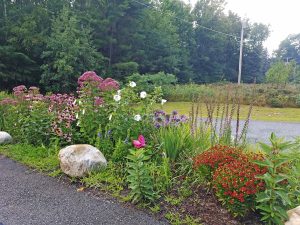
Because a rain garden floods periodically, choose plants that thrive in both wet and dry conditions. Native plants are ideal – they’re hardy, adaptable, and have deep roots that help absorb water. When choosing plants, consider whether your site is sunny or shady. Aim for a mix of heights, colors, and bloom times. Remember – a rain garden can be both functional and beautiful!
Learn More
Check out these other great resources to learn more about rain gardens.
Rain Garden How to Manual – Wisconsin Department of Natural Resources