
Smart Wakeboating Tips to Protect Canandaigua Lake
Wakeboats and their potential impacts on water quality – including shoreline erosion and lakebed sediment disturbance – have become an important topic nationwide, and we have been closely following the conversation.
This season, the CLWA is launching a “WakeSmart” outreach campaign to encourage wakeboaters to operate in deeper water and farther from shore when enjoying wake sports. Canandaigua Lake is a treasured resource and a vital economic driver for our region. By following a few simple practices, boaters can continue to enjoy wake sports while also helping to protect the lake’s exceptional water quality.
We are thrilled to have the support of our on-lake marinas as part of this campaign as we kick it off! They are a vital part to our success in getting the word out where it matters the most – to the people wakeboating on the lake. The participating marinas will have informational rack cards and posters at their sites – and will also educate their dock staff about the campaign. Thanks to Canandaigua BoatWorks, German Brothers Marina, Seager Marine and Freedom Boat Club, Smith Boys, and Sutters Marina.
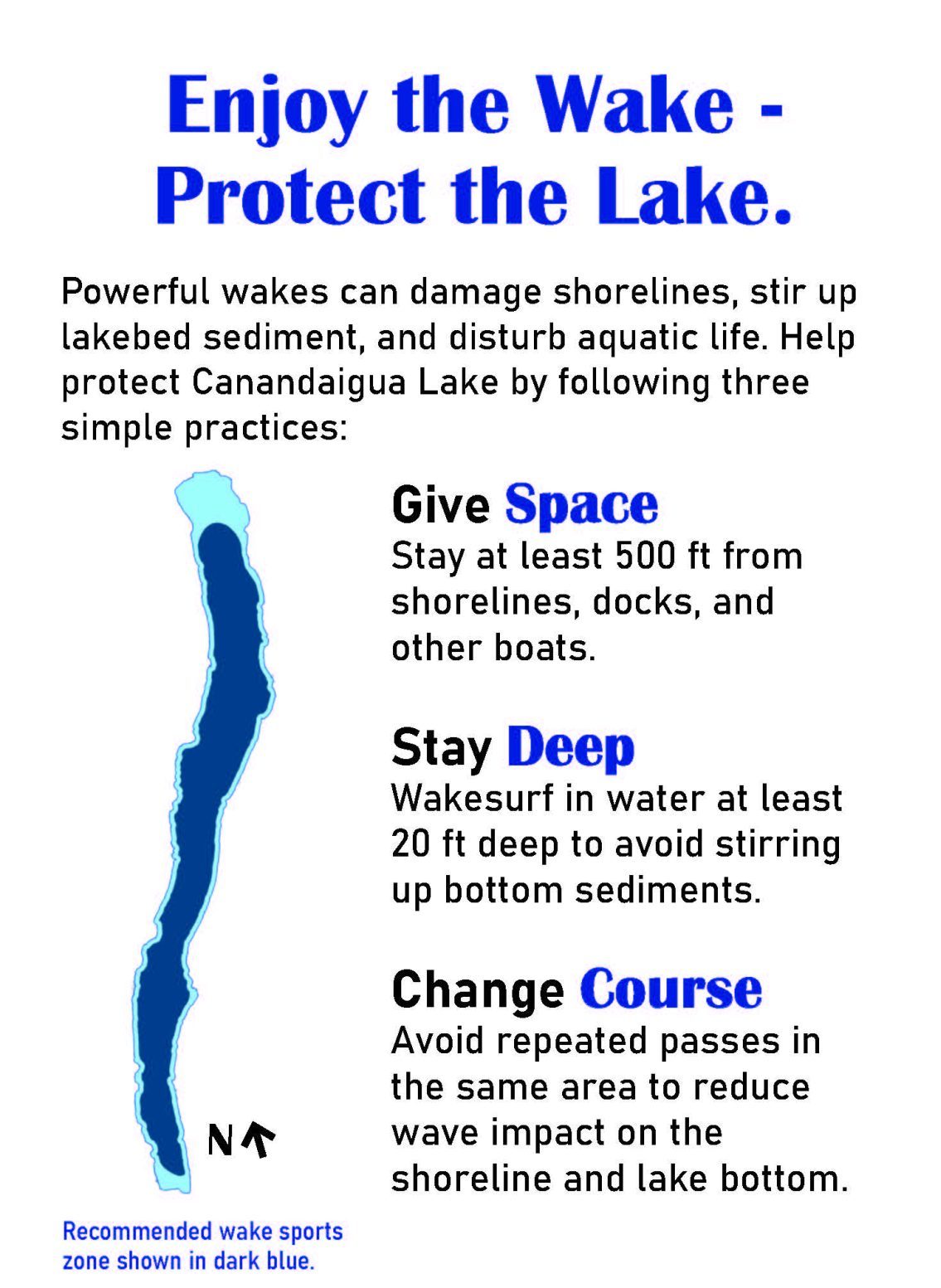
Enjoy the Wake – Protect the Lake.
Powerful wakes can damage shorelines, stir up lakebed sediment, and disturb aquatic life. Help protect Canandaigua Lake by following three simple practices:
Give Space.
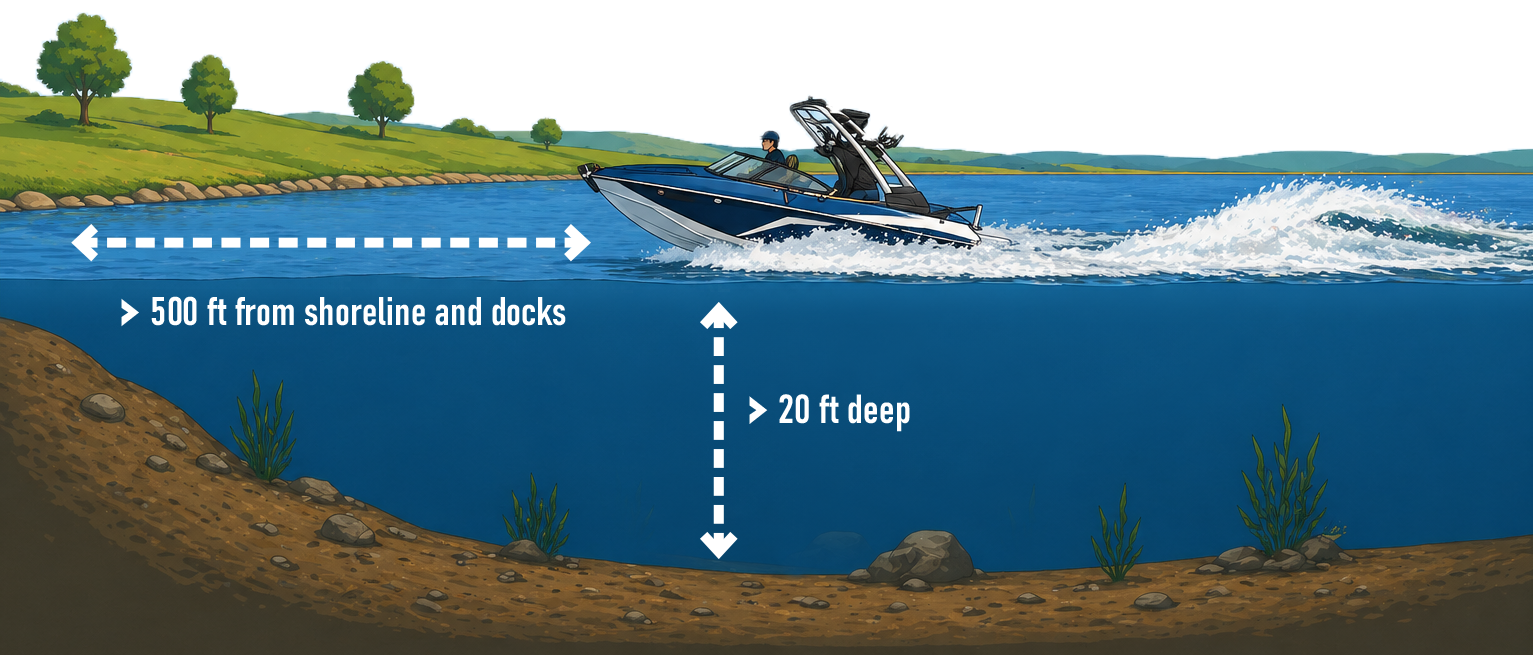
Stay at least 500 ft back from shorelines, docks and other boats.
Stay Deep.
Wakesurf in water at least 20 ft deep to avoid stirring up bottom sediments.
On our lake – this means to be sure to avoid the shallow north and south ends.
Change Course.
Avoid repeated passes in the same area to reduce wave impact to the shoreline and lake bottom.
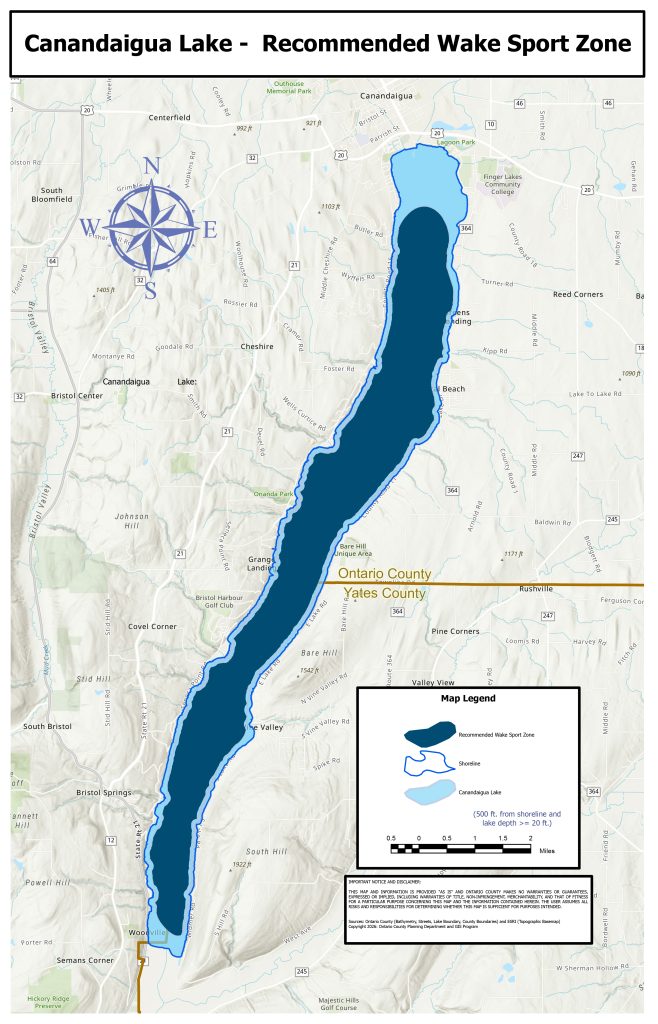
This map shows the recommended wake sport zone for Canandaigua Lake in dark blue.
Stay at least 500 ft from the shoreline and also in water at least 20 ft deep.
As you can see from the map – this means to avoid operating your boat in wakesport mode in the shallow north and south ends of the lake.
This map is compatible with the Avenza app. You can download this GPS enabled pdf map. Then you can download the app for free in the play store on your phone and upload this map – and then be able to see if you are in the recommended zone while you are out on the lake.
Open the Apple App Store or the Google Play Store on your phone and search for ‘Avenza Maps’.
(we are working on having it available directly in the Avenza app – stay tuned!) Thank you to the Ontario County Planning Department and GIS Program for their assistance with the maps.
The Canandaigua Lake Wake Smart outreach campaign is brought to you by the CLWA and the Canandaigua Lake marinas working together to protect our lake. Thanks to Canandaigua Boatworks, German Brothers Marina, Seager Marine and Freedom Boat Club, Sutter’s Marina, and Smith Boys Marina for joining us.




Wake Sports and Water Quality Impacts
WakeBoat Wakes Main Concerns:
- Shorelines: erosion and property damage
- lake bottom: sediment and nutrient resuspension, and impacts on aquatic plants and life
- AIS transport – water in ballast tanks hard to drain
- Safety of other lake users with large, powerful waves
Powerful wakes for wakesurfing can accelerate erosion, damage docks and boats and endanger paddlers and swimmers when created to close to shoreline and other lake users. The strong downward propwash created by wakeboats can stir up sediments in shallow waters, releasing phosphorus trapped in the lakebed and making it readily available to algae in the water column.
Wakeboat Wakes. They aren’t just ‘bigger’. They have more wave height, more wave energy, and more wave power compared to non-wakesurf boats.
A 2022 study from the St. Anthony Falls Laboratory Healthy Waters Initiative characterized boat generated waves created by recreation powerboats and wakesurf boats. Links to the complete study and reports are avaialble on our website -along with many other references. The study found that wakeboat waves are 2-3 times higher, with 3-9 times more wave energy, and 6-12 times more power than non-wake boats operating at planing speeds. So wakeboats require minimum operational distance of 500-600 feet from shore to achieve the same maximum wave height, total wave energy, and maximum wave power produced by a non-wake boat operating at planing speed 200 feet from shore.
After the initial research into wave energy, the next study focused on the hydrodynamic components of the impacts on the water column beneath the boat and at the lake bed. This study was just released in July 2025 and it investigated bow and pressure waves, transverse gravity waves, and propeller wash.The findings from this study indicated that wakeboats should operate in 20 ft of water or greater when in wakesurf mode to minimize impacts to the lakebed.
Wake Sports and WQ Impacts Additional Resources
CT Draft Wake Boat and Wakesurf Study – this study has a great summary of research and then links to all the research papers summarized at the end of the article
St Anthony Falls Laboratory Research Papers and Data, Videos, etc.